 ™
™
Guides · 🏙️ City life
Fredericton in the 1980s: Express Nights, the New Bridge and the Last Days of the Old Downtown
Before the Regent Mall swallowed Saturday afternoons, before the walking bridge, before anyone said “tech sector”, Fredericton was a government-and-university town of forty-odd thousand where the Fredericton Express packed the Aitken Centre, the brand-new Westmorland Street Bridge funnelled K-cars into downtown, Zellers at the Fredericton Mall sold your back-to-school wardrobe, and MuchMusic rewired every basement it reached after 1984. This is the decade as Fredericton actually lived it, from the freshet of April 1987 to the spring the Express skated their last playoff shift here.
The city you woke up in
Picture Fredericton on a school morning in 1980. The elms are still thick over the downtown grid, the Legislature’s dome catches the first light off the river, and a city of roughly forty thousand people is waking up to radio hosts it knows by first name. This is a government town and a university town, with two payrolls that never boom and never quite bust, and it moves at the speed of the Saint John River sliding past the Green: steady, wide, unhurried.
It is also, in a way that is hard to explain now, a city still getting used to its own edges. The amalgamation of the early seventies had folded Nashwaaksis, Barkers Point, Marysville and their neighbours inside the city limits, but nobody on the north side said they were “going downtown” without meaning across the river. Marysville still felt like the mill town Alexander Gibson built, even though the great brick cotton mill at its heart had gone quiet in the seventies. Silverwood and Skyline Acres were the newer subdivisions; Prospect Street was where the parking lots were multiplying.
Information arrived on paper and on air. The Daily Gleaner landed on doorsteps with the day’s deaths, weddings and hockey scores, and CFNB, carrying call letters it had held since 1926 and a fair claim to being the province’s radio pioneer, was the voice in most kitchens at 550 on the AM dial. Cable television existed, but it was a modest bundle of channels; the idea that a music station from Toronto would soon colonize every rec room was still science fiction.
Sundays were genuinely quiet. Stores closed, church parking lots filled, and the biggest decision of the afternoon might be a drive to the Mactaquac headpond or a walk on the Green. If you grew up here then, you remember the particular stillness of a Fredericton Sunday, the way the whole city seemed to exhale at once.
And yet the eighties would end with the city measurably changed: a new bridge, a lost hockey team, a swept election, a flood for the record books and a shopping centre out on Regent Street quietly gathering strength. If you have ever wondered how Freddy became the city it is now (or how it got that nickname at all), the eighties are where a surprising amount of the story turns.
The bridge that redrew the map
Every Fredericton driver of a certain age carries a mental map with a bridge on it that no longer exists. The Carleton Street Bridge, a steel truss thrown across the river in 1905, was how the north side got downtown: narrow, rattly and, by the 1970s, hopelessly overmatched by the traffic of a growing city. Crossing it at rush hour was an act of patience; meeting a truck halfway was an act of faith.
The fix was years in the fighting. Through the mid and late seventies, citizen groups (the Citizens’ Bridge Committee, and later a coalition that called itself Save Our City) organized against the location and scale of the proposed replacement, worried that a big modern crossing and its collector roads would bulldoze the character of the historic riverfront. They lost the argument but shaped the conversation, and the anxiety they voiced (that Fredericton could accidentally pave over the very things that made it Fredericton) never really left the city’s politics.
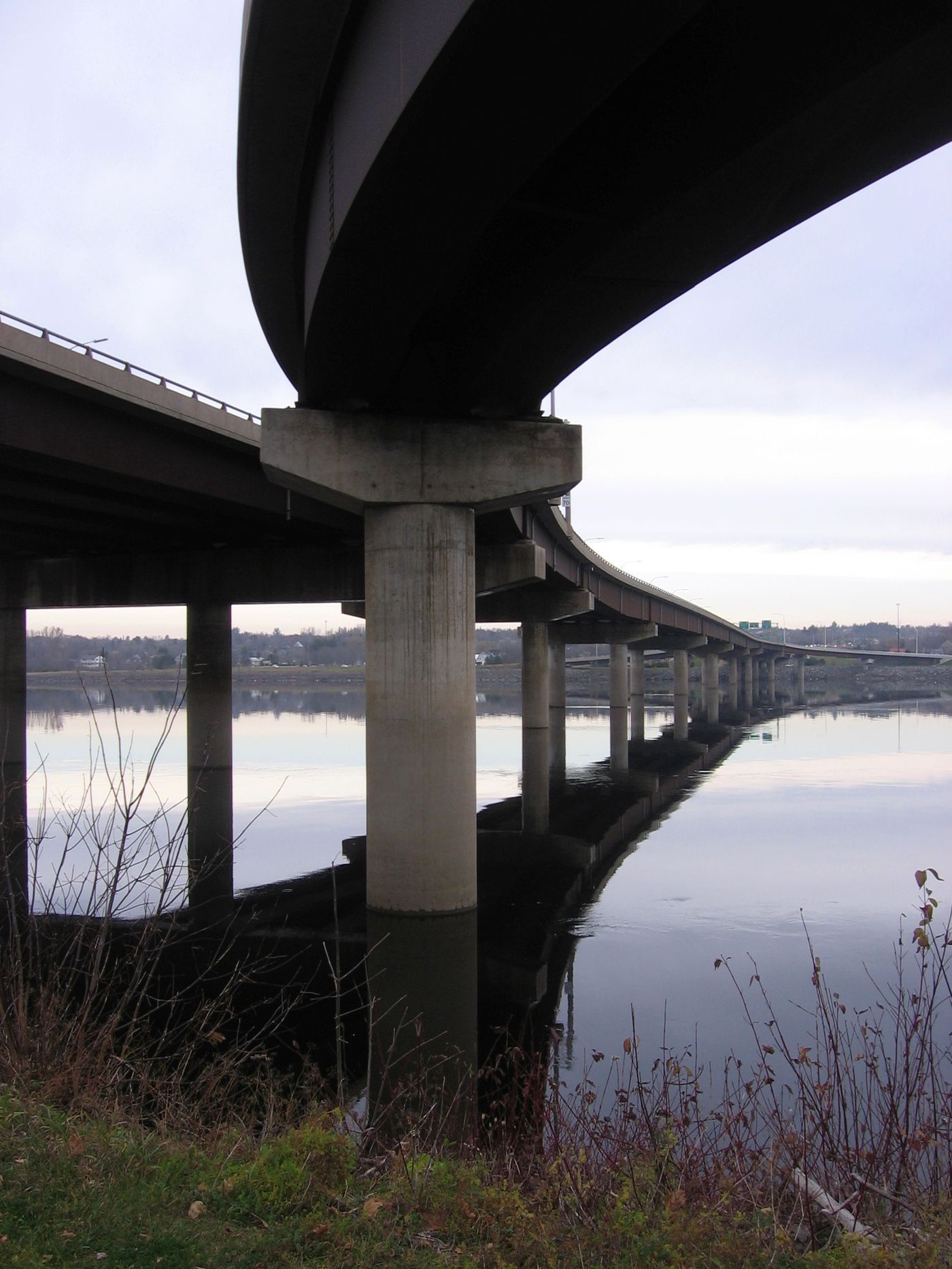
The Westmorland Street Bridge finally opened on September 19, 1981: four lanes, 750 metres of steel girder, a walkway along the north side. For a city used to squeezing across a two-lane antique, it felt like being handed a highway. Suddenly the north side was minutes from Queen Street, and the daily geometry of thousands of lives quietly rearranged itself.
The old Carleton Street spans were dismantled afterward, but the piers were left standing in the river, and they stand there still, a row of stone punctuation marks that gulls and memories perch on. If you were a kid in the back seat in 1981, you probably remember the novelty of the first drive across, the strange width of it, your parents debating whether the new bridge would “kill downtown” or save it.
The honest answer turned out to be both and neither. The bridge made downtown easier to reach and easier to leave, and for the rest of the decade those two forces pulled against each other: government workers and shoppers pouring in by day, the growing gravity of the Prospect Street and Regent Street parking lots tugging everyone uphill by night.
Downtown in its workaday prime
Downtown in the eighties was not a heritage district or an entertainment quarter; it was simply where things got done. You banked there, bought shoes there, renewed your licence there, and on the way you passed through a set of institutions so fixed they seemed geological. Read’s, the newsstand whose name went back generations downtown, held its corner on King Street with the papers and magazines; decades later, when its café-era descendant finally closed in 2018, the whole city mourned it like a relative.
Around the corner at 79 York Street stood Mazzuca’s Variety, the narrow storefront where the Mazzuca family had been selling newspapers, magazines and tobacco since long before anyone reading this was born. The local book about the family is titled Gruff & Ready, which tells you everything about the service and why people loved it. You did not go to Mazzuca’s for small talk; you went because it had the paper you wanted and always had.
Kings Place was the modern face of downtown, a mixed office-and-retail complex opened in 1974 at 440 King Street, with government workers stacked in the towers above and shops below. At lunch hour it hummed; on a February day it was the warm shortcut everyone took. Down the street, the Lord Beaverbrook Hotel, holding the riverbank since 1948, was still the address for everything that mattered: political banquets, wedding receptions, retirement dinners, prom photos on the front steps.
The one thing downtown lost early was its movie house. The Gaiety at 550 Queen Street had been showing pictures under one name or another since the days of Mary Pickford, and after a devastating fire in May 1939 it had been rebuilt in a matter of months, reopening that September with 900 seats. On March 31, 1981, it showed its last reel, the final downtown theatre to go dark. After that, movies meant a drive up the hill, and Queen Street nights belonged to the taverns, the live bands and the clubs. Ask anyone of a certain vintage about a night at the Cosmo and watch their face change; some institutions live more vividly in memory than in any archive.
Saturday mornings redeemed everything. The Boyce Farmers Market on George Street was then what it is now, the city’s weekly reunion: farmers in from the river valley, bacon in the air, wet wool and coffee, half the city circulating between the stalls. Around the corner, Officers’ Square hosted band concerts and ceremony the way it had for a century (a role it is reclaiming today).
Mall days: Zellers, K-Mart and the kingdom of Prospect Street
Before the Regent Mall was the centre of the retail universe, the Fredericton Mall on Prospect Street was THE mall, and if you grew up here you can still walk it with your eyes closed. Opened in 1971 as the city’s first enclosed shopping centre, it ran Zellers at one end, Sobeys under the same roof, a corridor of shops in between (old-timers will remember the Met from its early years), and a parking lot that on a December Saturday was a contact sport. Back-to-school meant Zellers; so did your first bike, your Halloween costume and, if your timing was lucky, lunch at the in-store restaurant while your mother consulted the flyer.
Across town on Smythe Street stood the K-Mart Plaza, so named because K-Mart was reason enough to name a plaza. It had the toy aisle of record, the automotive counter your father trusted, and, attached to it, the Plaza Cinemas, which meant a kid could be dropped for a matinee while the errands got done. Woolco and its famous $1.44 Days were part of the same era’s shopping vocabulary across the region, names your family spoke the way people now say “Amazon”, until Walmart absorbed the chain in the mid nineties and the word vanished from the language.
Groceries were a neighbourhood affair. Save-Easy stores, often carrying their owners’ names, anchored the north side and the suburbs; Sobeys and the mall supermarkets handled the big weekly shop. And a surprising amount of retail happened on paper: the Sears and Eaton’s catalogues were studied like scripture, orders placed at counters, parcels picked up weeks later in a ritual that taught a generation patience.
The Regent Mall existed through all of this, open out on Regent Street since the mid seventies, but it was a modest cousin then, one more stop on the hill rather than a destination. Its empire-building expansions belonged to the nineties. In the eighties, the gravitational centre of acquiring things was still split between Prospect Street, Smythe Street and a downtown that could sell you a suit, a book and a wedding ring within three blocks.
You know you grew up in Fredericton in the eighties if you can still hear “attention K-Mart shoppers” in your sleep, if your winter boots came from Zellers and your hockey cards from a corner store, and if the phrase “meet you at the mall” needed no further address.
Game night at the Aitken: the Fredericton Express years
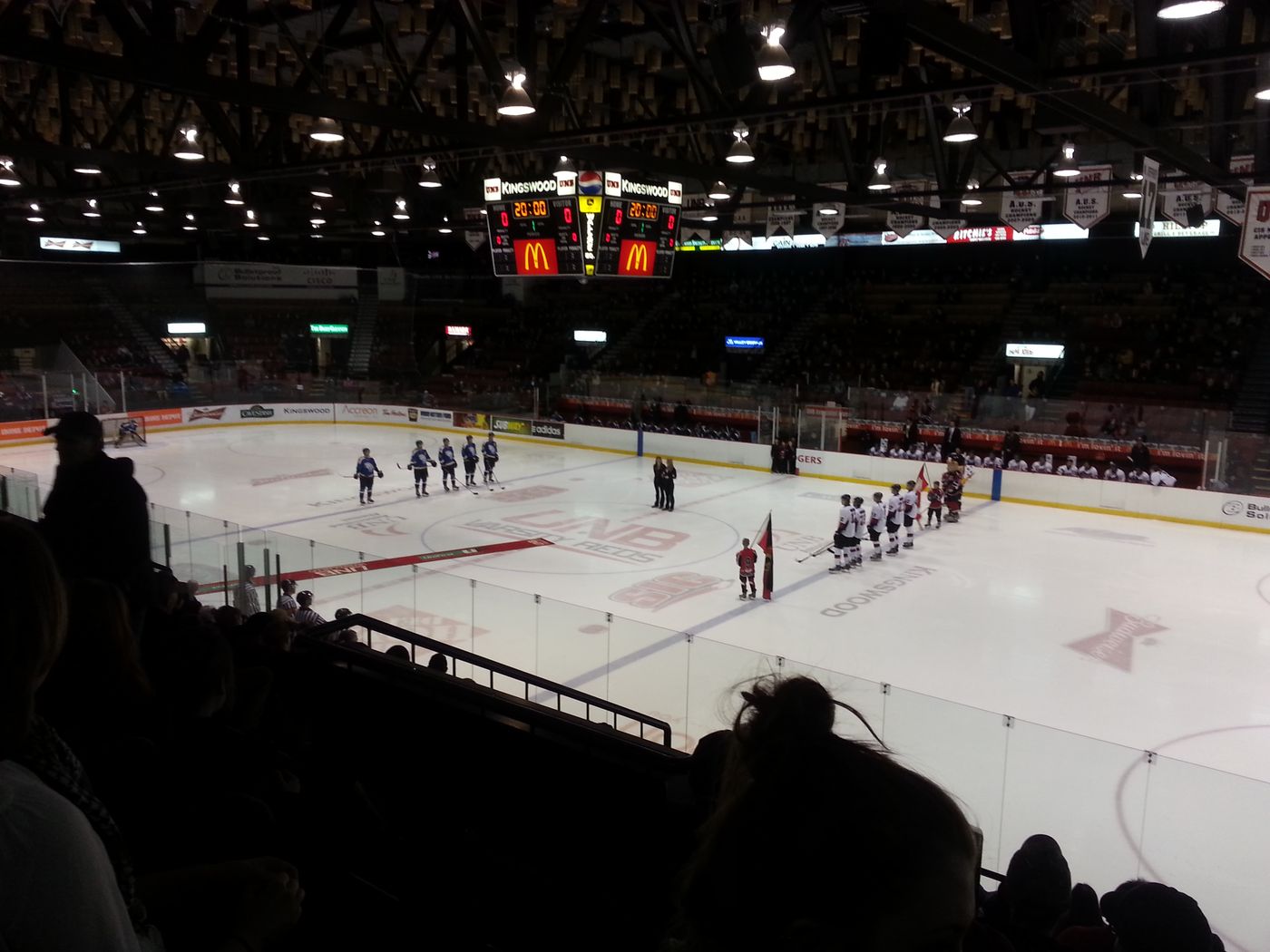
In 1981 the American Hockey League came to town, and for seven winters Fredericton was a professional hockey city. The Fredericton Express set up in the Aitken Centre, the concrete bowl UNB had built on the hill in 1976, seating a shade over three thousand for hockey, and on the right night it felt like the whole city was inside it.
The Express were one of the AHL’s odder households, a farm operation shared by the Quebec Nordiques and the Vancouver Canucks: prospects bound for two different NHL futures sharing one dressing room. It worked well enough on the ice. The Express won the North Division in 1982-83 and again in 1983-84, and a parade of future and former NHLers passed through town, close enough to touch, billeted and bumped into at the mall like anyone else.
What people remember, though, is the feeling. The cold walk up the hill from the parking lot, breath hanging in the air. The organ. The cowbells. The crack of a slapshot in a rink small enough that you heard everything, including opinions about the referee delivered in full Maritime candour. Kids hung over the glass during warmup with programs and pens; intermission meant fries and hot chocolate and arguing lines with your father.
The best season was the last one. In 1987-88 the Express put up the strongest regular season in their history, 42 wins, 27 losses and 8 ties for 95 points, second in the North Division behind only the Maine Mariners. Then came the spring: Sherbrooke fell in six games, first-place Maine fell in five, and Fredericton was in the Calder Cup final for the only time in its Express years. The ending was cruel in the way only sport manages. The Hershey Bears swept the final in four straight, capping a perfect 12-0 playoff run that still stands among the most dominant in league history.
It should have been the start of something. Instead the two-headed partnership behind the club had frayed, and in the summer of 1988 the franchise moved away to become the Halifax Citadels. The sting was real but short-lived: in 1990 the Montreal Canadiens moved their farm team here and the Fredericton Canadiens carried pro hockey through the nineties. But ask anyone who stood in the Aitken in the spring of ’88 and they will tell you the Express finale felt like the end of a chapter the city had only just learned to love.
Being sixteen in Fredericton
Teenage Fredericton in the eighties ran on gas money, quarters and FM static. The weekend ritual was the loop: down King, around, back up Queen, windows down if the weather allowed, cassette deck doing its best, the same twenty cars passing each other for hours because the point was never to arrive anywhere. If you had no car, you knew someone who did, and the price of admission was chipping in for gas at two dollars a turn.
Movies meant the Plaza Cinemas on Smythe Street, a Famous Players twin since 1973 that grew from two screens to four in August 1981 and became the default first-date venue for an entire generation, passing to Empire Theatres in 1986. Across the river there were the Nashwaaksis twin cinemas, and at the edges of memory the drive-ins, names like Sunset, Brookside and Valley, in their long twilight by then but still glowing on warm nights for the lucky.
Arcade machines were everywhere the decade could fit them: rows of cabinets where a paper-route fortune in quarters disappeared into Pac-Man and Donkey Kong, corner stores with a single machine by the chip rack, and the low-grade parental panic that accompanied all of it. Roller skating had its craze years too, and every school dance ended with the same slow songs echoing off the same gym walls.
September meant the Ex, the exhibition grounds lighting up with midway rides, barn smells and scandalous games of chance, the whole city’s teenagers orbiting each other under the lights. Winter meant outdoor rinks and shinny until your toes gave out, and the Aitken or the Lady Beaverbrook Rink when you could get ice.
And everyone worked: bagging groceries at a Save-Easy, stocking shelves at Zellers or K-Mart, slinging fries, delivering the Gleaner. The money went to gas, tapes, movie tickets and the mall, which is to say it went in a circle, which is to say it was a perfect system.
You know you were a Fredericton teenager in the eighties if you cruised the King Street loop with nowhere to go, saw everything at the Plaza’s four screens, lost a paper-route fortune one quarter at a time, and considered the Ex in September the social event of the year.
The soundtrack: CFNB, CIHI and the day MuchMusic arrived
Radio in eighties Fredericton was a two-station conversation. CFNB was the elder statesman, the station whose call letters dated to 1926 and whose word carried the trust of every kitchen in the valley; it was where you turned for news, obituaries and, crucially, storm closures. The upstart was CIHI at 1260 on the AM dial, signed on in August 1977 by local owners, playing the hits and sounding young.
CIHI’s morning man from 1979 was a fellow named Norm Foster, who read Fredericton its weather and traffic while quietly writing plays on the side. Theatre New Brunswick premiered his Sinners in 1983 and The Melville Boys in 1984, and the guy on the clock radio was on his way to becoming one of the most produced playwrights in Canadian theatre history. That is the most Fredericton fact imaginable: the morning voice turned out to be nationally famous, and the city got to say it knew him when (it is a long local tradition).
Then there was the television event that split the decade in two. MuchMusic launched nationally on August 31, 1984, and once cable carried it into Fredericton living rooms, everything changed. Music stopped being something you only heard and became something you watched; VJs became household names; and a generation learned to hover over the VCR record button waiting for a favourite video to come around again.
The hill got its own frequency too. On January 24, 1981, CHSR, the UNB campus station that had been broadcasting to residences one way or another since 1961, made its first over-the-air FM broadcast, one of the first campus stations in the country to earn an FM licence. Suddenly the whole city could tune in to everything the charts ignored, delivered by students who cared about music the way other people care about religion.
The rest of the soundtrack was handmade. Mixtapes dubbed off the radio with surgical timing. Columbia House arriving in the mail, a stack of albums for a penny and consequences later. Walkmans on the school bus, ghetto blasters at the riverbank. And live music never left downtown: bands worked the taverns and clubs along King and Queen, the Playhouse and the Aitken brought the bigger tours through, and in a city this size the guitarist on stage Saturday night was often your teacher, your mechanic or your cousin, which was exactly how everyone liked it.
School days: FHS the giant, and life up the hill
For most anglophone teenagers in eighties Fredericton, high school meant one word: FHS. Fredericton High School was the giant that swallowed the whole south side and beyond, a student body the size of a small town flooding its corridors, the Black Kats’ black and gold on every second jacket. The line repeated at every assembly was that FHS was the biggest high school in the Commonwealth. Nobody ever seemed to produce the paperwork, but with a couple of thousand students under one roof, nobody argued either. Leo Hayes and the great north-side split were still years away; in the eighties, everyone funnelled through the same doors.
The scale created its own culture. You could go five years and never share a class with your neighbour. There were more clubs, teams and factions than some universities managed, and surviving the cafeteria as a grade nine was a rite of passage people still describe with thousand-yard stares at reunions.
Up the hill, UNB gave the city its second heartbeat. The Red Devils, carrying a hockey name the university had used for decades, shared the Aitken Centre ice with the Express, and a dedicated fan could watch professional hockey Friday and university hockey Saturday without moving seats. STU, tucked alongside UNB on the hill, added its own students and its own colours to the mix, and every September the city’s population visibly swelled and got younger overnight.
The decade’s sporting heartbreak on campus came early: at the start of the eighties UNB pulled the plug on Red Bombers varsity football, citing cost, and decades of fall Saturdays at College Field went with it. For the families who had grown up on Bomber football, its absence was a hole in the calendar that a club revival would not fill for another generation.
Still, the university kept giving the city things it could not have generated alone: concerts and events at the Aitken, lectures and film series, and a steady supply of young people spending their loan money downtown, keeping the record shops and pizza counters honest.
Curtain up: the Playhouse and the gallery
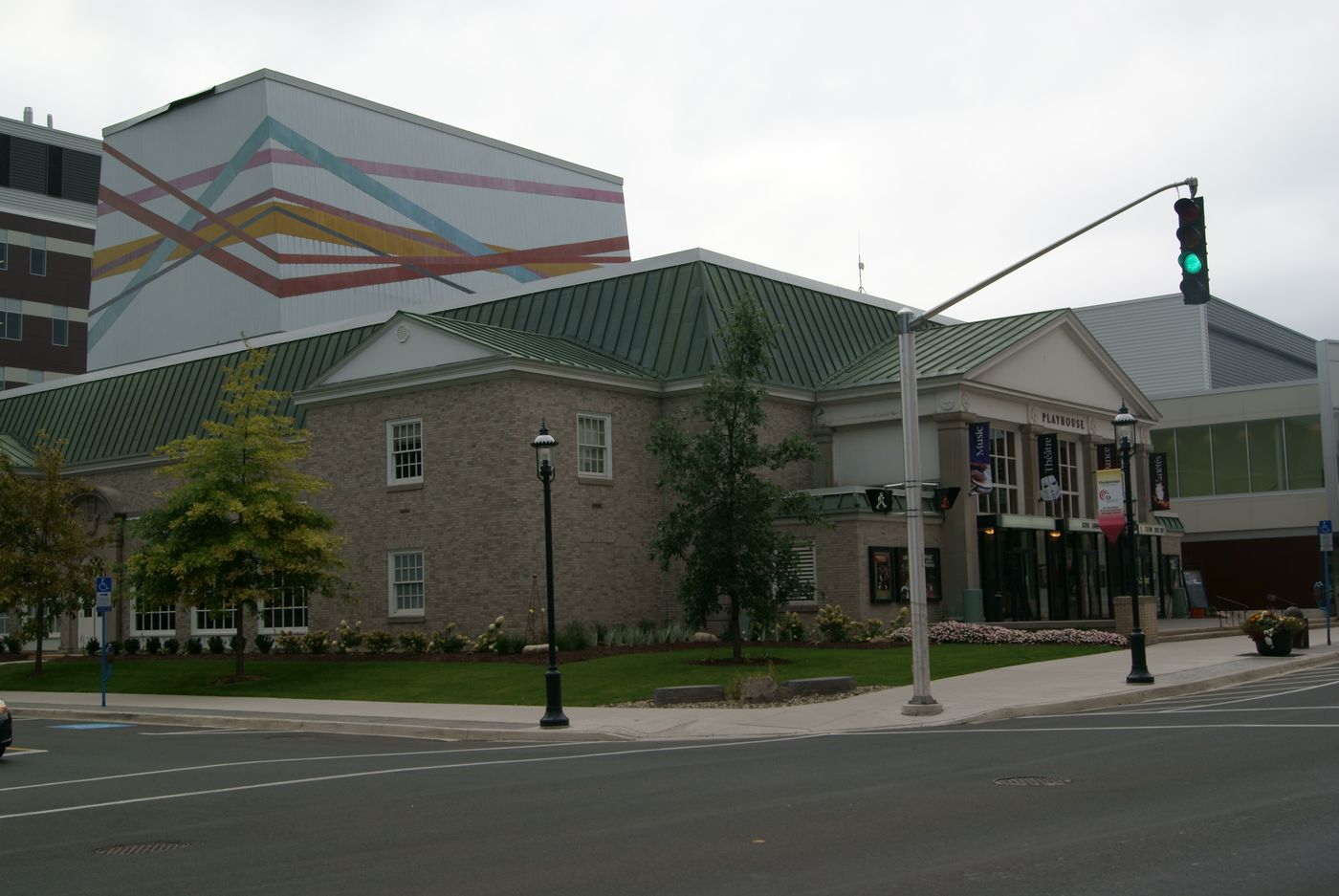
For a city its size, eighties Fredericton punched absurdly above its weight in culture, and it owed most of that to one family’s chequebook. The Playhouse on Queen Street, the theatre that opened in September 1964 on a million-dollar gift from Lord and Lady Beaverbrook, was in its prime: subscription seasons, touring acts, school matinees that emptied classrooms and filled velvet seats. A major renovation in the early seventies had given it a forty-foot fly tower and a proper working stage (plus a Tom Forrestall mural on the tower), and the fly system itself was rebuilt in 1988, the sort of invisible upgrade audiences never notice and performers never stop being grateful for.
It was also home base for Theatre New Brunswick, founded in 1968 with Walter Learning as its first artistic director and built on a then-radical idea: load full professional productions onto trucks and carry them to towns across the province. In the eighties the trucks still rolled out of Fredericton, and the company passed through the hands of Malcolm Black and then Janet Amos, with the playwright Sharon Pollock taking the chair as the decade closed. It was Black who took a chance on the local morning-radio host with scripts in his drawer, and TNB spent the rest of the century premiering Norm Foster plays that went on to stages across the country.
A few doors down, the Beaverbrook Art Gallery had been startling visitors since 1959 with a collection no city of forty thousand had any right to own. The centrepiece then as now was Salvador Dalí’s enormous Santiago El Grande, and every Fredericton child of the eighties has the same memory: a school trip, a turn into the gallery, and that horse rearing up a wall taller than your house. You did not have to like art. The Dalí made the argument for you.
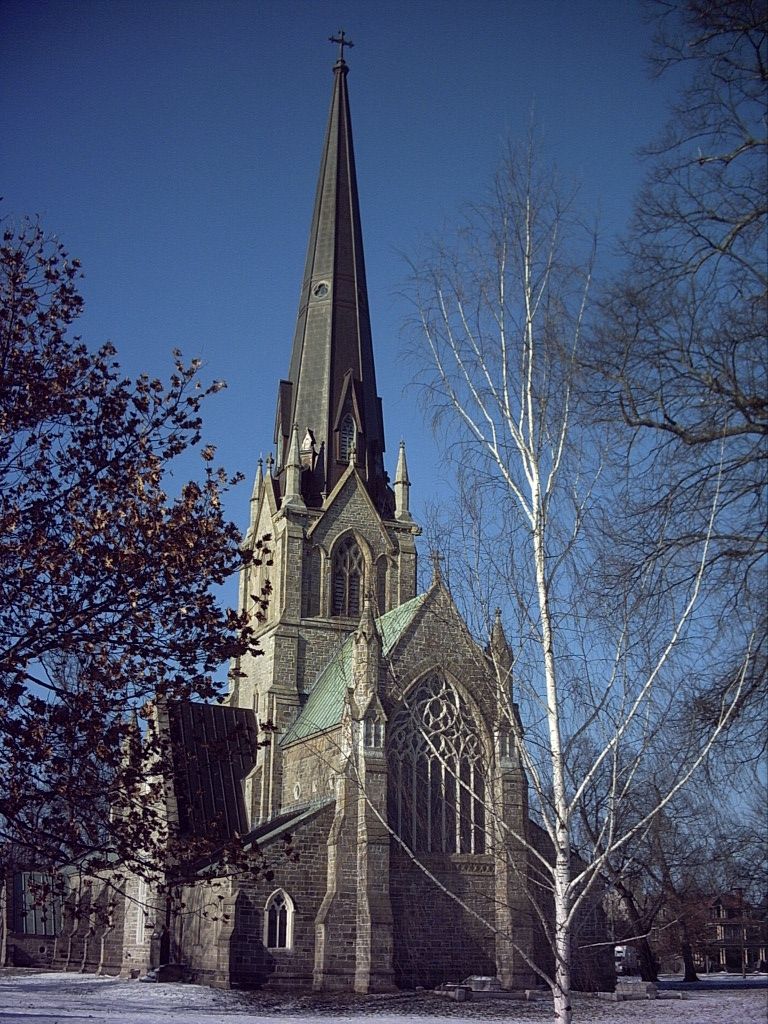
Between the Playhouse, the gallery, the Legislature and the cathedral, a downtown walk in 1985 passed more culture per block than most Canadian cities could offer, a fact locals absorbed so young they mostly forgot to be impressed by it (plenty of it is still there waiting).
What we wore, drove and ate
The look of eighties Fredericton was practical Canadiana with occasional ambition. Rugby pants and Cougar boots in the school hallways, ski jackets worn from October to April regardless of whether anyone skied, big hair defying the humidity off the river, and one good outfit reserved for the Beaverbrook Hotel occasions. Kids dressed from the Zellers and K-Mart racks and the Sears catalogue, and the first name-brand item you saved up for yourself was a genuine life event.
The driveways told the automotive story of the decade: Chrysler K-cars fresh off the line, Chevettes wheezing up the Regent Street hill, wood-panelled wagons hauling hockey gear, and pickups that were tools rather than fashion statements. Vinyl seats in July taught a generation about heat transfer; a block heater cord dangling from the grille was simply what winter looked like.
The eating landscape was quietly changing. Donairs, Halifax’s great gift to late-night judgment, spread through Fredericton’s pizza shops during the era and instantly became the official food of leaving downtown at closing time, with garlic fingers as the supporting act. Pizza Delight, New Brunswick’s own home-grown chain, was the family-restaurant default. And early in the decade the Diplomat set up by the river on Woodstock Road and began its long reign as the city’s beloved Chinese-and-Canadian institution, the place open when nothing else was, where every family had a standing order (its heirs still feed the city today).
Home tables kept older rhythms. Fiddleheads in May, because this is fiddlehead country and the freshet delivers them almost to the door. Market sausage and brown bread on Saturdays from the Boyce vendors. River salmon when you knew someone, baked beans when you did not, and strong tea with absolutely everything.
The hard parts: freshet, snow and a mill gone quiet
No honest portrait of the decade skips the hard mornings. Winter ran the show for five months a year, and the ritual was universal: wake in the dark, radio on, the list of cancellations read out while children across the city prayed. When the big storms hit, Fredericton simply stopped, and neighbours with snowblowers became the most popular people on the street.
Spring brought its own reckoning. Living beside the Saint John River means living with the freshet, and in April 1987 the river reminded everyone who was in charge. Fed by a heavy snowpack, rain and ice jams, the water at Fredericton peaked at about 7.8 metres on April 2, at the time the third-highest open-water flood on record here, behind only 1973 and 1979. Across the basin the damage ran to some thirty million dollars; upriver at Perth-Andover, where the water reached record heights, the ice and surging river brought down a railway bridge that same morning. In Fredericton, people did what river people do: moved what they could, watched the Green disappear, and squeegeed out afterward.
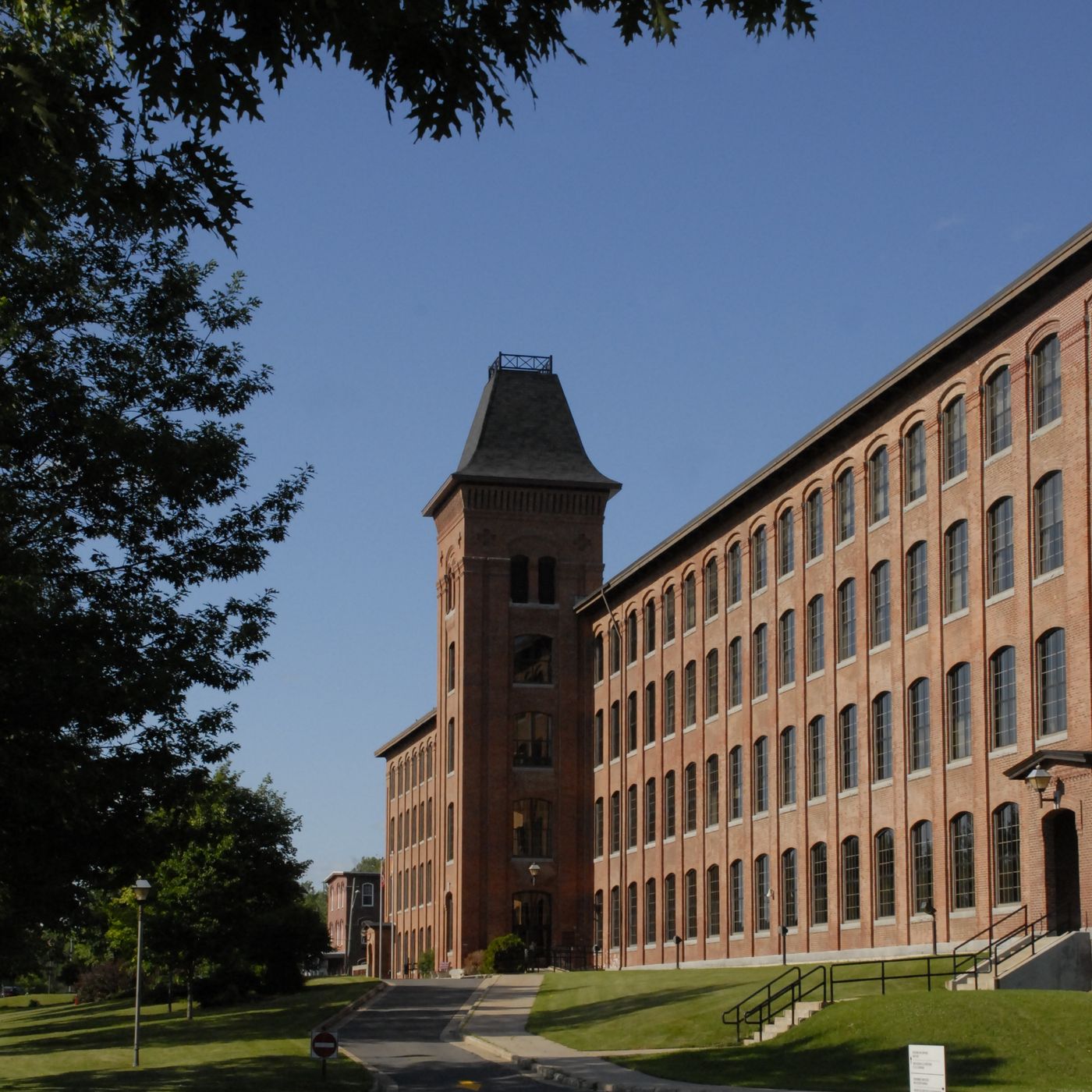
The decade also had to reckon with what the city no longer made. The Marysville cotton mill, the massive brick landmark Alexander Gibson raised in the 1880s, once ordered the lives of an entire company town, and it had fallen silent as a textile operation in the seventies. The eighties delivered its unlikely second act: the province began restoring the building in 1985 to house civil servants as Marysville Place, and on June 16, 1986 it was designated a National Historic Site. Office workers now typed where the looms had thundered, which was either a happy ending or a quiet one depending on which side of the river you asked.
The railways were fading too. The handsome 1923 station on York Street got a reprieve when VIA Rail ran a daily Dayliner from Fredericton to Halifax via Saint John and Moncton starting in 1981, but the service ended in 1985 and with it the era of stepping onto a passenger train downtown. The station began its long, sad slide toward broken windows, a decline that would not be reversed for decades (its rescue is a story of its own).
Underneath it all ran the era’s low hum of economic worry: young people leaving for Ontario and Alberta, downtown merchants eyeing the malls, the mill towns wondering what came next. Nostalgia should not sand that away. The eighties here were warm, but they were not soft.
How the eighties ended, and what was coming
The decade closed with a run of endings that everyone recognized as endings even at the time. On October 13, 1987, Frank McKenna’s Liberals won every single seat in the Legislature, all 58 of them, a sweep so total it made national news and left New Brunswick briefly without an elected opposition. Whatever your politics, the message was unmistakable: the province wanted a different future, fast.
The following spring the Fredericton Express gave the city its greatest hockey run and then vanished, off to Halifax in the summer of 1988 with the Calder Cup final banner still warm. The Aitken Centre sat quieter for two winters until the Fredericton Canadiens arrived in 1990 and the building filled again, this time in bleu-blanc-rouge.
Retail gravity was shifting uphill. The Regent Mall’s expansion era was coming, and with it the slow migration of the big stores out of the Fredericton Mall and off the downtown blocks. Zellers, K-Mart, Woolco: within a generation, every one of those names would be gone from the language, and the malls of the eighties would survive mainly as coordinates in local memory. Even the Plaza Cinemas’ four screens would go dark in 1996, the same season a ten-screen multiplex opened at the Regent Mall, which tells you everything about the direction of travel.
The nineties waiting around the corner would bring the walking bridge across the old rail crossing, a north-side high school to ease FHS’s legendary crowding, call centres and eventually the first stirrings of the tech economy, and a downtown that learned to sell atmosphere instead of appliances. Fredericton would come out of it well, better than most small cities did.
But if you were there, you keep the eighties somewhere specific: the cold air inside the Aitken, the smell of the market on a Saturday, the static between songs on CIHI, the long light over the river from the middle of a brand-new bridge. The city has changed around those memories without ever quite replacing them, which is, when you think about it, a very Fredericton way to treat the past. There are more of these stories in our guides, and the river, at least, has not changed its schedule at all.
Key takeaways
- The Gaiety on Queen Street showed its last reel on March 31, 1981, and after that a night at the movies meant the Plaza Cinemas in the K-Mart Plaza on Smythe Street, which grew from two screens to four that same summer.
- From 1981 to 1985 you could board a VIA Dayliner at the York Street station and ride to Halifax via Saint John and Moncton; when the service ended, so did passenger rail in downtown Fredericton.
- The Fredericton Express won North Division titles in 1982-83 and 1983-84 and reached their only Calder Cup final in 1988, where they were swept by a Hershey Bears team completing a perfect 12-0 playoff run; weeks later the franchise left for Halifax.
- The piers standing in the river below downtown are the leftovers of the 1905 Carleton Street Bridge, dismantled after the Westmorland Street Bridge opened on September 19, 1981.
- CIHI 1260’s morning host from 1979 was Norm Foster, whose plays Sinners and The Melville Boys premiered at Theatre New Brunswick in 1983 and 1984 while he was still on the air.
- Restoration of the old Marysville cotton mill began in 1985 to create Marysville Place, and the building was designated a National Historic Site on June 16, 1986, with civil servants working where the looms once thundered.
- The April 1987 freshet crested at about 7.8 metres in Fredericton on April 2, at the time the third-highest open-water flood on record behind 1973 and 1979.
Common questions
What was the Fredericton Express?
The Fredericton Express were the city’s American Hockey League team from 1981 to 1988, playing at the Aitken Centre on the UNB campus as a farm club shared by the Quebec Nordiques and the Vancouver Canucks. They won North Division titles in 1982-83 and 1983-84 and reached the 1988 Calder Cup final, where they were swept by a Hershey Bears team that went a perfect 12-0 through the playoffs. The franchise then moved to Halifax to become the Citadels, and the Fredericton Canadiens brought AHL hockey back in 1990.
When did the Westmorland Street Bridge open?
It opened on September 19, 1981, replacing the narrow Carleton Street Bridge of 1905. The old bridge’s steel spans were dismantled afterward, but its stone piers were left in the river, where you can still see them today.
Where did Frederictonians shop before the Regent Mall took over?
In the eighties the Fredericton Mall on Prospect Street, opened in 1971 as the city’s first enclosed mall and anchored by Zellers and Sobeys, was the main event, with the K-Mart Plaza on Smythe Street and downtown’s Kings Place (opened 1974) close behind. The Regent Mall existed, open since the mid seventies, but its dominance came with major expansions in the 1990s.
Where did people watch movies in 1980s Fredericton?
Mostly at the Plaza Cinemas in the K-Mart Plaza on Smythe Street, a Famous Players house that expanded from two screens to four in August 1981 and passed to Empire Theatres in 1986, plus the twin cinemas in Nashwaaksis. Downtown’s last movie house, the Gaiety on Queen Street, closed on March 31, 1981, and the area’s drive-in era was in its final years.
Did trains still run in Fredericton in the 1980s?
Briefly, yes. VIA Rail ran a daily Dayliner from the 1923 York Street station to Halifax via Saint John and Moncton from 1981 until 1985. After that service ended, the station sat unused and deteriorating for decades before its eventual restoration.
How bad was the 1987 flood in Fredericton?
The April 1987 freshet peaked at about 7.8 metres at Fredericton on April 2, at the time the third-highest open-water flood on record, behind 1973 and 1979. Driven by snowmelt, rain and ice jams, it caused roughly thirty million dollars in damage across the Saint John River basin and brought down a railway bridge upriver at Perth-Andover.

Get the Hey Freddy week ahead, every Monday
Fredericton’s events for the week, in one short email. Free, unsubscribe anytime.
Sources & further reading
This guide reflects the documented local consensus, reporting, reviews and community voices, verified where possible. Things change; if we’re out of date, tell Freddy.
- Fredericton Express (Wikipedia)
- 1988 Calder Cup playoffs (Wikipedia)
- Westmorland Street Bridge (Wikipedia)
- Marysville Cotton Mill (Wikipedia)
- Fredericton (York Street) station (Wikipedia)
- CKHJ / CIHI history (Wikipedia)
- Norm Foster (New Brunswick Literary Encyclopedia)
- Plaza Cinemas, Fredericton (Cinema Treasures)
- Gaiety Theatre, Fredericton (Cinema Treasures)
- Flood details, April 1987 (Government of New Brunswick flood database)
- 1987 New Brunswick general election (Wikipedia)
- Theatre New Brunswick (Wikipedia)