 ™
™
Guides · 🏙️ City life
Fredericton in the 2000s: Away Messages, Sandbags and the Decade the Reds Took Over
If your Fredericton came with a dial-up handshake and an MSN away message, this one is for you. The 2000s gave us the smoking ban of October 2004 that aired out the bars, the Varsity Reds’ University Cups of 2007 and 2009 (the first won in double overtime, no less), the naming of Willie O’Ree Place, the sandbag lines of the 2008 flood, and a quiet little company called Radian6, founded in 2006, that would change how this city saw itself. Pour something peaty and settle in.
Logging On: How the Decade Arrived
The 2000s came to Fredericton the way most things do here: quietly, over the river, with everyone half-watching from a kitchen window. Y2K was supposed to crash the computers at midnight. It did not. The lights along Queen Street stayed on, the water tower on the hill kept standing, and a city of not quite fifty thousand people woke up on January 1, 2000 to the same view it had always had: the Saint John River, wide and patient, deciding what kind of year it would let us have.
There was a small ache under the celebration, though. The spring before, the Fredericton Canadiens had played their last game. For nine seasons, from 1990 to 1999, the Aitken University Centre had been an American Hockey League building, a farm-team cathedral where future Montreal Canadiens skated under UNB banners. In 1999 the franchise packed up for Quebec City to become the Citadelles, and the AUC went strangely quiet. If you were a kid who had spent Friday nights up in those steep stands, the start of the decade felt like the end of something. Nobody knew yet that the same building was about to host the best hockey story this city has ever told. We will get there.
At home, the decade announced itself through the phone line. That screeching dial-up handshake was the sound of 2000 in Fredericton: somebody yelling from the kitchen that they needed to make a call, the painful minute-long load of a single photo, the miracle of a Hotmail inbox. High-speed crept through the city street by street as the decade went on, and with it came MSN Messenger, the true town square of the era. Half the social life of every teenager at Fredericton High or the brand-new Leo Hayes ran through screen names with song lyrics in them and the passive-aggressive art of the away message.
Downtown, mercifully, looked after itself. The pubs poured, the Officers’ Square cannons kept their posts, and the Boyce Farmers Market filled up every Saturday morning the way it had for generations. The 2000s would change plenty in this city. But it started slow, the way Fredericton likes it.
Downtown Mornings: Read’s, the Market and the Coffee Wars
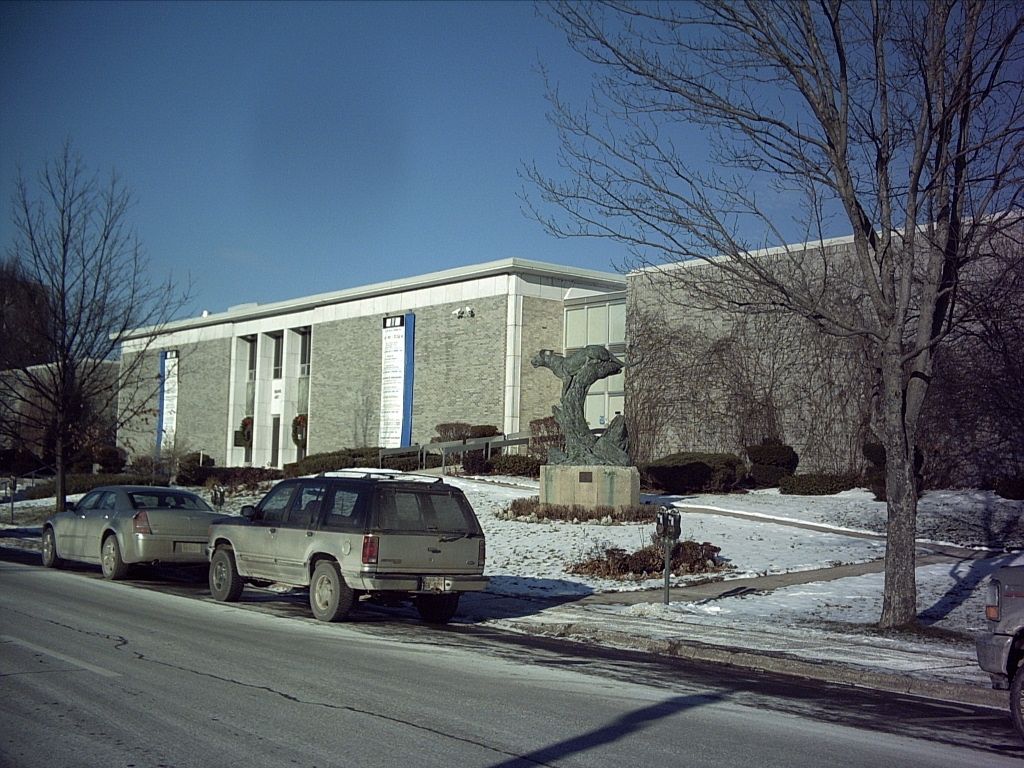
Every version of 2000s Fredericton, whether you were a student, a civil servant or a retiree with opinions about council, ran on the same downtown morning circuit. And the heart of it was Read’s Newsstand & Café on King Street. Read’s was the kind of place cities are supposed to have and mostly do not: racks of newspapers and magazines you could actually browse, coffee that came with conversation, and a rotating cast of regulars who treated it as a second living room. Job interviews happened there. Breakups happened there. Half the freelance work in this city was negotiated over a Read’s table. It carried on as a downtown institution right through the decade and beyond, holding out until 2018, which is why the grief when it finally closed felt so personal. In the 2000s, though, it was simply where you went.
Saturday mornings belonged to the Boyce Farmers Market, as they always have. The ritual was fixed: park badly, see four people you know before you reach the door, get in line for whatever your family swore by, and argue gently about whether you needed cheese. The market smelled like bread and wet wool from November through April, and no downtown renovation of any later decade has improved on that.
Then there was the coffee itself, which quietly became a battleground. Tim Hortons was everywhere, obviously; the drive-thru queue spilling onto the street was already a civic traffic problem by mid-decade. Downtown had its Second Cup in Kings Place for the paper-cup-and-blazer crowd, a fixture on King Street for years. And late in the decade the green mermaid finally arrived: a Starbucks opened out at Regent Mall in early 2008, and suddenly a city that had run for decades on percolator coffee and church-basement tea was debating the merits of a caramel macchiato in the mall corridor. It felt, at the time, like a certificate of arrival. Every city measures itself by strange yardsticks; that winter, ours was espresso.
If you want to trace what survived from that era, our eat and drink pages carry the descendants. But no algorithm will ever recommend you a Read’s. You had to be there.
October 2004: The Night the Smoke Cleared
Here is a detail younger Frederictonians genuinely struggle to believe: for the first few years of the 2000s, the bars were full of cigarette smoke. Not a little. A haze. You came home from a night on King Street and your jacket needed its own shower. The smoke hung in the stage lights, curled over the pool tables, and soaked into every band poster stapled to every wall downtown.
Then, on October 1, 2004, New Brunswick’s Smoke-free Places Act came into force, and the province butted out indoors, all at once. It was one of the early province-wide bans in Canada, and in Fredericton you could feel the change in a single weekend. The smokers moved to the sidewalks and to Piper’s Lane, that scruffy, beloved cut-through off King Street, which promptly became the best place in the city to overhear everything. Bar owners fretted about business. Business, as it turned out, was fine. Within a year, nobody could remember why we had put up with it so long, though everyone kept a fond, contradictory nostalgia for the fug of it all.
The rooms themselves were in fine form. Dolan’s Pub, pouring Irish hospitality on King Street since 1994, packed them in for East Coast bands, the floor bouncing hard enough to worry an engineer. And around the corner, the Lunar Rogue was quietly becoming famous. Frank Scott had been building his single malt collection for years, and in the 2000s the whisky world started to notice, with travel writers and whisky magazines ranking the Rogue among the great whisky bars anywhere. It was a strange, wonderful thing to explain to visitors: yes, this modest pub in downtown Fredericton has one of the best whisky walls in the country, and yes, the man behind it will happily tell you what to drink.
You know you were in a Fredericton bar in the 2000s if you remember exactly which coat was your “smoking bar coat” before October 2004, and the first strange, clean-smelling weekend after.
The Soundtrack: The Capital Rises, Harvest Gets Big
Every good decade needs a room, and the 2000s in Fredericton had the Capital. It had opened in 1998 as the Capital Bar, and through the 2000s it grew into the warren of stages and side rooms off King Street where the city’s indie scene actually lived. Wilser’s Room became the spot where you saw a band six months before anyone else in the Maritimes had heard of them, standing shoulder to shoulder with the same forty people you saw at every show. The sound was loud, the floor was sticky, and the bookings were fearless. A whole generation of local musicians learned their trade on those stages, and a whole generation of the rest of us learned that Tuesday nights could be worth leaving the house for.
September, meanwhile, belonged to Harvest. The Harvest Jazz & Blues Festival had started back in 1991 as a modest downtown affair, but the 2000s were the years it became the Fredericton event, when whole blocks of downtown disappeared behind festival tents each fall and the streets filled with horns and slide guitar for a week. You measured your year by it. Summer did not officially end until you had stood in a packed tent with a plastic cup, hearing some blues legend you could never otherwise afford to see, four blocks from your house.
The screen got its festival too. In 2001 the province’s filmmakers’ co-operative launched an annual fall film festival under the name Tidal Wave, and in 2005 it was rechristened the Silver Wave Film Festival, the November red carpet it still rolls out for local filmmakers today. And just as the decade closed, songwriters were planning a midwinter answer to Harvest: the very first Shivering Songs arrived in January 2010, weeks after the calendar turned, filling downtown rooms like Wilmot United Church with folk music in the coldest stretch of the year, a warm postscript to everything the 2000s had built.
The radio through all of it? Rock on the FM dial for the drive to work, CBC Radio for the school closures, and the same five songs at every school dance. Some things in Fredericton do not change. Check what’s on now and you will find the descendants of every one of these stages.
The AUC Roars Back: A Dynasty Begins
When the Fredericton Canadiens left for Quebec in 1999, the Aitken University Centre could have settled into a long, sleepy retirement of trade shows and skating practices. Instead, in 2000, UNB hired a coach named Gardiner MacDougall, and the building got a second life better than its first.
The UNB Varsity Reds of the early 2000s were good. By mid-decade they were scary. And on March 25, 2007, in Moncton of all places, they finished the job. In the University Cup final at the J. Louis Lévesque Arena, in front of a building pulling hard for the hometown Aigles Bleus, the Reds won 3-2 in double overtime, the kind of game that ages a fan base a decade in a night. It was the program’s second national title ever, its first under MacDougall, and if you made the drive down Route 2 that weekend, you remember the ride home, honking across the Westmorland Street Bridge at one in the morning. Two years later they did it again, this time far from home at the Fort William Gardens in Thunder Bay, beating Western Ontario 4-2 in the 2009 final behind a hat trick from tournament MVP Lachlan MacIntosh. Two national championships in three springs, and the clear, giddy sense that this was not a fluke but the start of something. It was. The banners kept coming for the next two decades, but the 2000s are when Fredericton learned that the best university hockey in Canada lived at the top of the hill.
The other rink story of the decade belonged to the Northside. When the city built its gleaming new twin-rink complex on Cliffe Street, there was really only one name worthy of the door. On January 16, 2008, the building was renamed Willie O’Ree Place, honouring the Fredericton boy who broke the NHL’s colour barrier with the Boston Bruins on January 18, 1958. O’Ree’s story, fifty years old almost to the day, suddenly had a permanent home address in his own hometown, and every minor hockey kid lugging a bag through those doors at 6 a.m. walks past it still. He belongs at the top of any list of famous people from Fredericton, and the 2000s were the decade the city finally said so in brick and steel.
Regent Mall Saturdays and the Big Boxes on the Hill
Shopping in 2000s Fredericton meant the Regent Mall, full stop. Saturday afternoon in that parking lot was a civic event: circling for a spot near the doors in January, the slush lagoon at every curb cut, the food court roulette, teenagers doing laps past the same three stores because the mall was, socially speaking, the only indoor place to be seen. The south side retail strip along Regent and Prospect had been growing for years, and the mall sat at the centre of it like a landlocked cruise ship.
The Northside had its own humbler institution in the Brookside Mall, anchored by its Sobeys, the kind of mall where you knew the cashiers by name and the corridor traffic was mostly people who had walked over for exercise. Downtown, Kings Place kept office workers fed and carried the flag for indoor shopping between the government buildings.
Then, late in the decade, the ground shifted. Up at the top of the hill, where Regent Street meets the bypass, the Corbett Centre began rising out of a gravel field, its first section opening in 2008 with a Home Depot as the first tenant: vast, orange, the largest hardware store most Frederictonians had ever walked into. Others followed on its heels, and everyone understood what it meant. More pads were graded and waiting, and the rumour on every coffee row in town was the big one: Costco was coming. It arrived just after the decade turned, opening in August 2011 complete with a gas bar, and the pilgrimage patterns of the whole capital region rearranged themselves around it.
Downtown merchants watched all of it with a familiar knot in the stomach. Fredericton had survived the mall era of the seventies and eighties; now came the box-store era, with acres of free parking working against every Queen Street storefront. The downtown answer, then as now, was to be something a power centre cannot: festivals, pubs, the market, the river. It mostly worked. But if you loved a little shop that did not make it out of the 2000s, you know the cost was real.
The Spring the River Rose: 2008
Every Fredericton generation gets one flood it measures the others against. For anyone who lived here in the 2000s, it is the spring of 2008. The winter before had been absurd, snowbank-over-the-mailbox absurd, one of the snowiest anyone could remember. When April turned warm and the rain came, all of it headed for the Saint John River at once, and the river did what the old-timers had been warning about since 1973.
Through the last week of April the water climbed, and on May 1, 2008 it crested in Fredericton at about 8.36 metres, twenty-seven feet and four inches, less than a foot shy of the 1973 record. Some fifty streets in the Fredericton area closed. The Green disappeared under brown water. Waterloo Row became a canal, with canoes gliding past half-drowned porches near the old truck-eating bridge. Basements from Lincoln to Maugerville filled, and Route 105 along the north bank went under, cutting off the river communities upstream and down.
What people actually remember, though, is the sandbags. The city and province threw open sand depots, and Frederictonians simply showed up: students on exam break, office workers in rubber boots, strangers forming bag-filling lines for houses they had never visited, passing sandbags hand to hand while the CBC counted down the crest forecasts on every radio. Whole neighbourhoods that had never spoken past a wave suddenly knew each other’s basements intimately. Restaurants ferried food to volunteers. Kids too young to lift a full bag held the empties open. It was miserable, cold, wet work, and nearly everyone who did it now talks about it with something close to fondness.
The water fell back through early May, leaving ruined rec rooms, a damage bill in the millions across the region, and a permanent recalibration of what “the river is high this year” means in local conversation. The 2008 flood became the reference point, the one that every subsequent spring freshet gets compared to. The river gives this city everything: its views, its bridges, its whole reason for being here. Once a generation or so, it reminds us who is in charge.
Something Was Compiling: The Tech Seeds
Nobody called Fredericton a startup city in the 2000s. It was a government town and a university town, and proud of both. But look closely at the decade and you can see the whole future being quietly assembled in offices most of the city never noticed.
UNB’s computer science labs had been turning out talent for years, and around the turn of the decade some of that talent stopped leaving. Q1 Labs grew out of network security work Chris Newton had done at UNB, defending the university’s own network; with entrepreneur Brian Flood he turned it into a company whose software would eventually guard networks around the world, its development team rooted in Fredericton even as the business went global. Then, in 2006, came the one that changed the story: Radian6, founded in Fredericton by a team of co-founders including Newton and led by Marcel LeBrun, building tools to monitor what people were saying on this strange new thing called social media. Perfect timing, as it turned out. In 2011 the payoff arrived all at once: Salesforce bought Radian6 for about US$326 million, and IBM announced it was buying Q1 Labs, a combined windfall that made Fredericton briefly the most interesting tech story in the country. But the work, the hires, the late nights, the belief that you could build a world-class company from here: that all happened in the 2000s.
Meanwhile the rest of us were living the consumer version of the same revolution. Facebook reached Canadian university campuses mid-decade, and UNB and STU students were arguing about pokes and relationship statuses while their parents still thought “wall” meant drywall. MSN Messenger ruled the evenings. Phones flipped: the Motorola Razr was the undisputed status object of 2005 in every high school cafeteria in the city. Then, in the summer of 2008, the iPhone arrived in Canada, and within a couple of years the flip phones, the digital cameras, the MP3 players and the paper maps all began collapsing into one glowing rectangle.
The decade started with one phone line per household and a screeching modem. It ended with the internet in our pockets and two future nine-figure exits growing quietly on the hill. Not bad for a sleepy government town.
Meanwhile, on the Northside
The Northside spent the 2000s doing what it has always done: quietly getting on with things while the south side got the headlines. But the decade was kinder to it than most, and by 2009 the north bank of the river looked meaningfully different than it had at the millennium.
The connective tissue came first. The old railway bridge had carried walkers instead of trains since 1997, and through the 2000s it became the city’s great commuter shortcut and its favourite postcard, that graceful curve of green steel from Nashwaaksis into downtown. In June 2008 it took the name it carries today, honouring trail-builder Bill Thorpe, and “meet you at the walking bridge” entered the permanent local phrasebook. On a July evening with the sun going down the river, there was no better free entertainment in New Brunswick.
Brookside Mall carried on as the Northside’s living room, its Sobeys the after-church and after-hockey stop, its corridors home to the small rituals of Nashwaaksis life. Main Street kept its diners and its traffic lights. And then came the new addresses. The gleaming twin rinks on Cliffe Street opened their doors and, in January 2008, took the name Willie O’Ree Place, instantly becoming the busiest building on the north bank every weekend from September to April. Toward the end of the decade, ground was being worked along a new corridor with a name that acknowledged an older history than any mall: Two Nations Crossing, which would fill through the following years with the shops and services that finally let Northsiders stop crossing the river for every errand.
If you grew up north of the river in the 2000s, your geography was its own complete world: school, rink, Brookside, the walking bridge when you wanted the bright lights of Queen Street. The Northside has its own personality, always has, and the 2000s were the decade the city finally started building like it believed that.
You know you grew up on the Northside in the 2000s if your Saturday was a Brookside Mall Sobeys run, a 7 a.m. game at the new rinks on Cliffe Street, and the long way home across the walking bridge just because.
How It Ended: Detours, Downturns and a New Idea of Ourselves
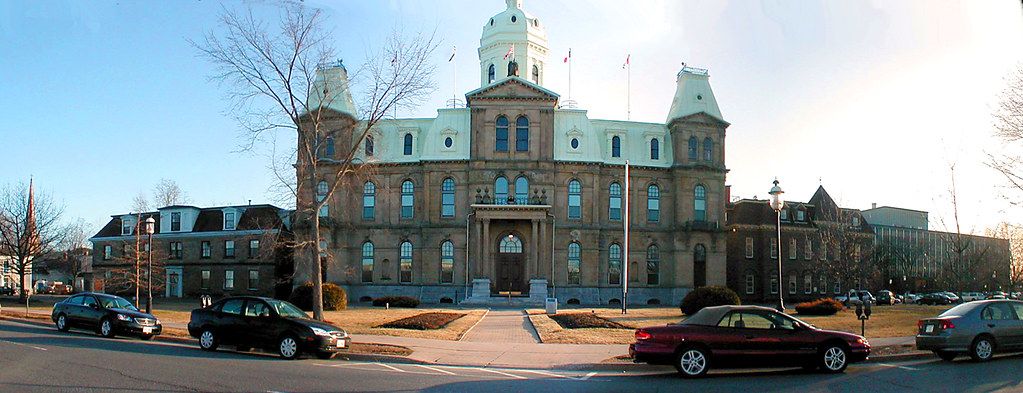
The 2000s did not end with a bang in Fredericton. They ended the way Fredericton decades do: with a construction notice and a quiet change of self-image.
When the world economy fell over in late 2008, this city wobbled but did not fall. That is the unglamorous blessing of a government town: thousands of provincial paycheques kept clearing, the university kept enrolling, and while the news from Ontario and Alberta was grim, Fredericton’s version of the recession was more of a long, anxious exhale. People delayed the new car and kept the old snowblower going another winter. The lineups at the market did not get any shorter.
The real local dread of 2009 was infrastructure. Word was out that the Princess Margaret Bridge, the workhorse of the east end since the late 1950s, was due for a complete overhaul, and the major rehabilitation that began in 2010 would mean seasons of detours, with every south-side commuter rerouted and every trip to the airport requiring strategy. Frederictonians talked about the coming bridge work the way coastal towns talk about hurricane season: with maps, contingency plans and dark humour.
And underneath it all, the city was quietly trading identities. The decade had opened with Fredericton mourning an AHL team and waiting for dial-up to connect. It closed with two more national hockey banners in the AUC rafters, a smartphone in a growing number of pockets, a smoke-free downtown in full musical roar, and a pair of homegrown tech companies about to sell for a combined sum that would make the whole country look east. Within a couple of years, “startup capital” would be the phrase in every economic development speech, and it would be true, and it would have been built entirely out of 2000s parts.
Wander Queen Street today and the decade is still findable: the Rogue’s whisky wall, Dolan’s on a Friday, the Cap’s stage, the market on Saturday morning. The away messages are gone. The city they belonged to is still here. More of its story lives in our guides, whenever you are ready for another trip.
Key takeaways
- Before October 1, 2004 you needed a designated bar coat, because a night at Dolan’s or the Capital left everything you wore smelling like an ashtray.
- The Aitken Centre went from losing the AHL’s Fredericton Canadiens in 1999 to raising University Cup banners in 2007 and 2009 under Gardiner MacDougall, the first of them won 3-2 in double overtime in Moncton.
- The 2008 flood crested at twenty-seven feet four inches on May 1, less than a foot shy of the 1973 record, and half the city seemed to end up in a sandbag line that week.
- The Northside’s new twin rinks took the name Willie O’Ree Place on January 16, 2008, fifty years almost to the day after the Fredericton native broke the NHL’s colour barrier with Boston.
- The Corbett Centre’s first section opened in 2008 with Home Depot as its first tenant, and everyone spent the rest of the decade waiting for the Costco rumour to come true.
- Radian6 was founded in Fredericton in 2006, three years before anyone was calling this a startup city and five years before Salesforce paid about US$326 million for it.
- Harvest, born in 1991, spent the 2000s growing into the week that owned downtown every September, which is how you knew summer was officially over.
Common questions
What happened to the Fredericton Canadiens?
The Fredericton Canadiens were the AHL farm team of the Montreal Canadiens, playing at the Aitken University Centre from 1990 to 1999. After the 1998-99 season the franchise moved to Quebec City to become the Citadelles. Pro hockey never returned, but the UNB Varsity Reds turned the same building into the home of a national dynasty in the 2000s.
When did UNB win the University Cup in the 2000s?
Twice. The Varsity Reds won the CIS University Cup on March 25, 2007 at the J. Louis Lévesque Arena in Moncton, beating the hometown Aigles Bleus 3-2 in double overtime, and again on March 29, 2009 in Thunder Bay, beating Western Ontario 4-2 behind a hat trick from tournament MVP Lachlan MacIntosh. Those two titles marked the start of the Gardiner MacDougall era of championships that continued for years afterward.
When did Willie O’Ree Place get its name?
The city’s twin-rink complex on Cliffe Street on the Northside was renamed Willie O’Ree Place on January 16, 2008, honouring the Fredericton-born winger who became the NHL’s first Black player with the Boston Bruins on January 18, 1958, almost exactly fifty years earlier.
How bad was the 2008 Fredericton flood?
Very bad: the Saint John River crested at about 8.36 metres (27 feet 4 inches) in Fredericton on May 1, 2008, the highest level since the record 1973 flood. Around fifty streets closed, Waterloo Row and Route 105 went under water, hundreds of properties were damaged, and volunteer sandbagging brigades became one of the defining community memories of the decade.
When did smoking get banned in New Brunswick bars?
New Brunswick’s Smoke-free Places Act came into force on October 1, 2004, ending smoking in bars, restaurants and other enclosed public places across the province. Fredericton’s smokers moved to the sidewalks and Piper’s Lane, and the bars aired out almost overnight.
When did Costco come to Fredericton?
Costco opened at the Corbett Centre in August 2011, just after the decade ended. The Corbett Centre itself began opening in 2008, with Home Depot as its first tenant, so the 2000s were the years Fredericton watched the big boxes rise on the hill and waited.

Get the Hey Freddy week ahead, every Monday
Fredericton’s events for the week, in one short email. Free, unsubscribe anytime.
Sources & further reading
This guide reflects the documented local consensus, reporting, reviews and community voices, verified where possible. Things change; if we’re out of date, tell Freddy.
- 2007 CIS University Cup, Wikipedia
- University Cup Schedule & Results, Lakehead Thunderwolves
- 2009 CIS University Cup, Wikipedia
- 2008 Saint John River flood, Wikipedia
- Willie O’Ree Place, My New Brunswick
- Smoke-free Places Act, SNB 2004, CanLII
- Fredericton Railway Bridge (Bill Thorpe Walking Bridge), Wikipedia
- Looking Back at Q1 Labs, Radian6, Entrevestor
- Salesforce.com formally acquires Fredericton-based Radian6, NBIF
- Silver Wave Film Festival, Wikipedia
- About Shivering Songs
- Read’s Newsstand & Cafe Is Closing In Downtown Fredericton, Huddle